Category: How To’s

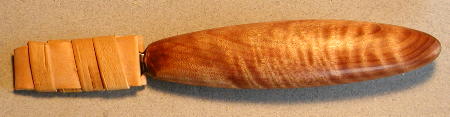
(If you do not have access to birch bark, cereal box cardboard works pretty good!) Birch bark is the preferred material because of its natural ‘tack’ – which has a nice drag on a knife to keep the sheath from sliding off. This is the traditional sheath material of Scandinavia. However, most folk do not…
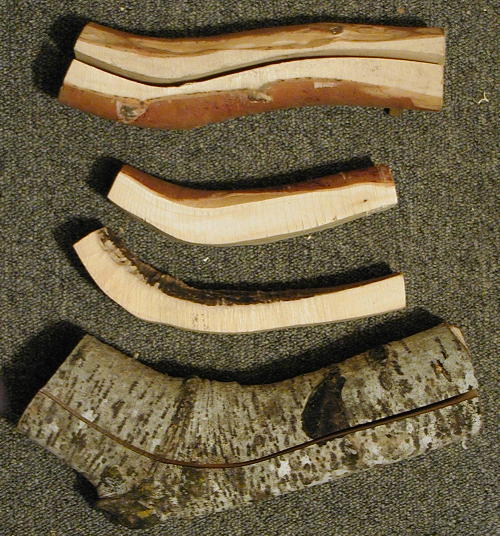
  Spoon crooks, also called elbows, are the natural bend in a branch or small tree. This is the preferred wood for spoon carving. Crooks are most commonly caused by a branch taking a turn where a small limb protrudes or where one has broken off. Trees are full of crooks, naturally, but only a…

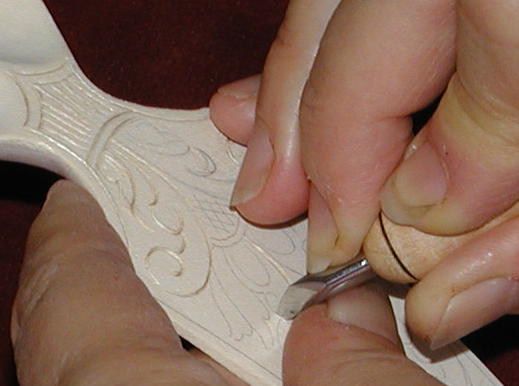
All pictures on this page are of Judy Ritger’s work, or her hands at work. by Judy Ritger and Del Stubbs HISTORY: Kolrosing (pronounced “coal-rose-ing”) is a very old method of giving fine line surface decoration to wood. It started centuries ago with simply using the tip of ones’ belt knife to make fine decorative…

  A strop for carving tools needs a very fine surface for accepting compound – yet is thin enough to not cause gross rounding of the micro bevel. I go through lots of hides at my leather wholesaler before I chose the ones that have a knap and thickness that is ideal. When you get…
